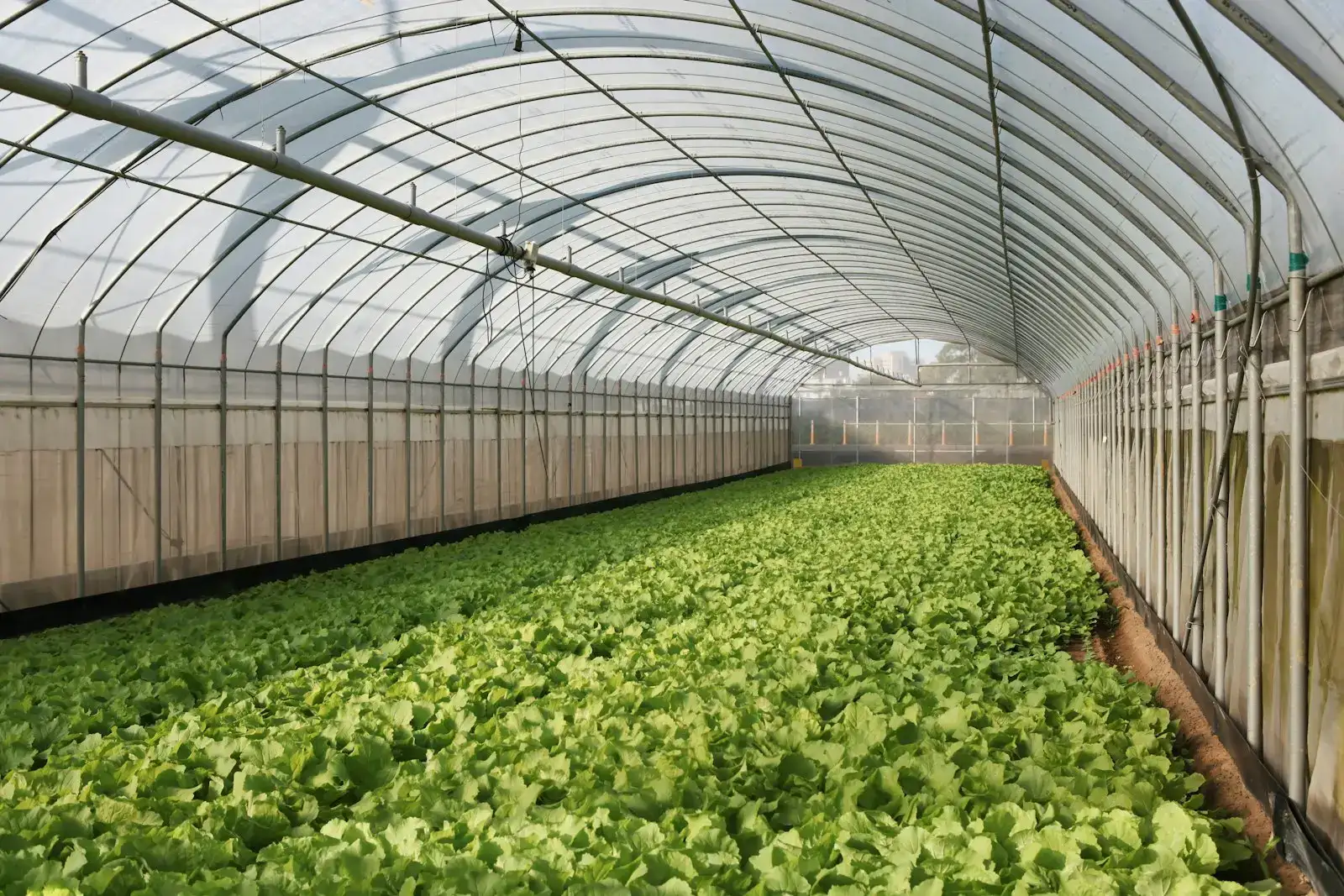
The short answer: many are being reused, mostly for other crops
A former cannabis facility can often be reused, and the most common reuse in Canada so far has been other controlled-environment agriculture: vegetables, seedlings, flowers and mushrooms. A smaller number have gone to food manufacturing, biotechnology or proposed data-centre use. What decides the outcome for a particular building is less the building itself than three things around it: the zoning (and, for farmland, the Agricultural Land Reserve rules), the licences the new use needs, and whether the power, HVAC and room layout match what the new occupant actually needs.
This page covers the reuse question. If the facility still holds a Health Canada licence, or a tenant is leaving, see selling a licensed facility and tenant exit and decommissioning first.
Canadian examples of cannabis facilities put to new uses
StratCann's March 2026 round-up, "Cannabis facilities find new life," lists a range of conversions across the country (StratCann). The examples below are drawn from that article and from the other sources linked. Prices were not disclosed unless stated.
| Facility | Former use | New or proposed use |
|---|---|---|
| Custom Cannabis Inc., Claresholm, AB | Cannabis greenhouses (operator bankrupt in 2023) | Hypha Farms: gourmet mushrooms, greens, microgreens and vegetables |
| Aurora Sky, Edmonton International Airport, AB | About 800,000 sq ft cannabis greenhouse | Bevo: vegetable seedling and ornamental propagation |
| Aurora Sun, Medicine Hat, AB | About 1.4 million sq ft cannabis greenhouse | Bevo: vegetable starters, flowers, horticultural products |
| Entourage Health (formerly WeedMD), Strathroy, ON | Cannabis cultivation, closed 2023 | Integral Farms Produce: tomatoes |
| Canopy Growth Tweed Farms, Niagara-on-the-Lake, ON | Cannabis greenhouse | Sold in May 2023 to a mushroom producer |
| Canopy Growth, Hershey Drive, Smiths Falls, ON | Cannabis production in a former chocolate plant | Returned to Hershey Canada (2023) |
| MediPharm Labs, Napanee, ON | Cannabis processing | Kensana Health: phytopharmaceutical biotechnology (2024) |
| Prairie Plant Systems / CanniMed, SK | Canada's first licensed cannabis producer | Listed in 2025 with a proposal for AI data-centre use; no confirmed buyer reported |
| Decibel Cannabis, Creston, BC | 26,000 sq ft cultivation facility | Conditional sale announced; buyer not disclosed |
Claresholm: cannabis greenhouse to mushrooms and produce
Hypha Farms moved into the former Custom Cannabis Inc. greenhouses in Claresholm, Alberta, and was operating in early 2026 with mushrooms (blue oyster, chestnut, lion's mane) and a range of vegetables (Grozine, summarizing CBC Calgary). The Calgary Herald reported that the company added extra cooling and humidification to suit mushrooms, and that the facility's CEO described bringing a building back after several vacant years as one of the biggest challenges (Calgary Herald via Yahoo News, March 31, 2026).
Aurora Sky: the largest greenhouse conversion
In 2022 Aurora Cannabis bought a controlling stake in vegetable propagator Bevo and agreed to sell the Sky greenhouse at Edmonton's airport to Bevo for up to $25 million, with the final price tied to Bevo reaching financial milestones at the facility; Bevo planned to use it for vegetable plant propagation and orchids (MJBizDaily, August 25, 2022).
A BC example: Creston
In February 2026 Decibel Cannabis announced a conditional agreement to sell its Creston, BC property for about $2.5 million and consolidate cultivation in Saskatchewan (Decibel news release, February 25, 2026). StratCann reported that a company spokesperson said the buyer is not another cannabis company, and that the facility sits next to a potato farm (StratCann).
What carries over from a cannabis build, and what doesn't
Licensed cannabis facilities were built to a specification that is unusual for agricultural or light-industrial buildings. Some of it is an asset to the next user; some of it is cost the next user will not pay for.
Usually useful to the next occupant
- Electrical serviceLarge services and distribution built for lighting and HVAC loads suit other indoor crops, food processing, cold storage and some light industry.
- HVAC and dehumidificationSealed rooms with climate control are directly relevant to mushrooms, seedlings, vertical farming and temperature-controlled storage, although equipment may need re-sizing.
- Insulated, cleanable roomsWashable wall and ceiling finishes, floor drains and room separation can suit food-grade or GMP-style uses.
- Security and access controlFencing, cameras and controlled entry are valued by pharmaceutical, lab and high-value storage users.
- Water treatment and irrigationFiltration, storage tanks and fertigation systems carry over to other crops.
Often a cost, not an asset
- Many small rooms. Flowering-room layouts can be the wrong shape for warehousing or manufacturing, which prefer open floor plates and dock access.
- Vault and security fit-out. Vaults and extra walls can take up space that a non-cannabis user has no use for.
- Specialized equipment. Extraction booths, cannabis-specific lighting and odour control may have little value to the next user and can involve removal costs.
- Deferred maintenance. Buildings left vacant can suffer from moisture, pests and stale mechanical systems; the Claresholm operator's comments above reflect this.
- Ceiling heights and loading. Low clear heights or no dock-height loading limit warehouse and distribution use.
An engineer's review of electrical capacity, mechanical systems and structure is usually worth doing before marketing a building for a specific new use. For the environmental and permit side, see environmental and building due diligence.
Reuse options and the approvals each one tends to need
| Possible new use | Main approvals to check in BC |
|---|---|
| Vegetables, seedlings, flowers, mushrooms | Zoning for agriculture or greenhouse use; ALR rules if on reserve land; food safety licensing only if the product is processed or shipped out of province |
| Vertical farming | As above; on ALR land, the ALR Use Regulation treats "controlled environment structures" separately (see below) |
| Food manufacturing | Industrial or processing zoning; health authority approval; CFIA licence for interprovincial trade or export |
| Natural health products | Industrial zoning; Health Canada NHP site licence |
| Cold storage, warehousing, light industrial | Industrial zoning; building permit for any change of occupancy; usually not permitted on ALR land without ALC approval |
| Data centre | Industrial zoning; BC Hydro service; BC's data-centre power allocation rules for large loads |
Zoning, ALR and permits for a change of use
Zoning is set locally, so the first check is whether the new use is permitted in the current zone. BC local governments can regulate the use of land and buildings through zoning bylaws, and can issue temporary use permits for uses the zoning does not allow, valid for up to three years and renewable once (Local Government Act, ss. 479, 493 and 497). One detail matters for vacant facilities: if a lawful non-conforming use is discontinued for a continuous six months, later use must follow the current bylaw (Local Government Act, s. 528). The BC zoning guide covers this in more depth.
If the facility is in the Agricultural Land Reserve
On ALR land, a person must not use agricultural land for a non-farm use unless it is permitted by the Act or regulations, or approved by the Agricultural Land Commission (Agricultural Land Commission Act, s. 20). Growing another crop is a farm use. A greenhouse or a structure for mushroom production is expressly listed as a structure necessary for farm use (ALR Use Regulation, s. 5).
Vertical farming is treated differently. The regulation defines a "controlled environment structure" to include vertical farming and rotating tray systems, but not greenhouses, mushroom structures or qualifying cannabis structures. A local government may not prohibit a controlled environment structure only if it was built or under construction before August 31, 2022 (ALR Use Regulation, ss. 1 and 13.1). Warehousing, cold storage for others, manufacturing or a data centre would generally be non-farm uses. See ALR and farm classification for how non-farm use applications work and what happens to property tax class.
Site disclosure
If any part of the site was used for an activity listed in Schedule 2 of the Contaminated Sites Regulation (bulk chemical or fuel storage, laboratories and others), applying for rezoning, a development permit or a building permit can trigger a Site Disclosure Statement (Government of BC).
Food safety and health product licensing for food uses
Growing fresh produce does not by itself need a federal food licence. The Canadian Food Inspection Agency says growing and harvesting fresh fruits or vegetables does not require a Safe Food for Canadians licence, but processing them (including minimal processing such as coring and chopping), or manufacturing, packaging or labelling food, does need one when the food is exported or traded between provinces. Food traded and consumed only within BC does not need the federal licence (CFIA).
Within BC, food processing premises are approved by the regional health authority. In the Okanagan, Interior Health reviews plans before construction and inspects before issuing approval to operate under the Food Premises Regulation (Interior Health).
A former processing building may also interest natural health product makers. Health Canada requires manufacturers, packagers, labellers and importers of natural health products to hold a site licence and follow good manufacturing practices (Health Canada).
Data centres: power is the constraint in BC
Cannabis buildings attract data-centre interest because of their electrical service. In BC, large new data-centre loads now go through a provincial allocation process. Under the Energy Statutes Amendment Act, 2025 and a regulation in force February 1, 2026, capacity for conventional and AI data centres is capped for set periods, and BC Hydro's 2026 call applied to requests of 10 MW or more; cryptocurrency mining is excluded from the AI data-centre category (BLG, July 2026). A smaller load may fall outside that process, but a prospective buyer would still need to confirm available service with BC Hydro or the local utility.
A reuse plan is only as good as the approvals behind it. Before pricing a facility on a new use, confirm in writing that the zoning (and the ALC, if applicable) allows it, and that the power, water and wastewater capacity the new user needs is actually available.
How Sean can help
Sean Phillips is a REALTOR® with Coldwell Banker Executives Realty, licensed across British Columbia, and has worked on Health Canada licensing projects since 2014. He can help owners market a facility to both cannabis and non-cannabis buyers; see selling a cannabis grow facility. For owners weighing a reuse, he offers paid consulting, including remote video or on-site assessments of how a building's layout and systems fit other uses, quoted per site. Legal, zoning and engineering questions should go to the appropriate professionals. Contact Sean to talk about a specific property.