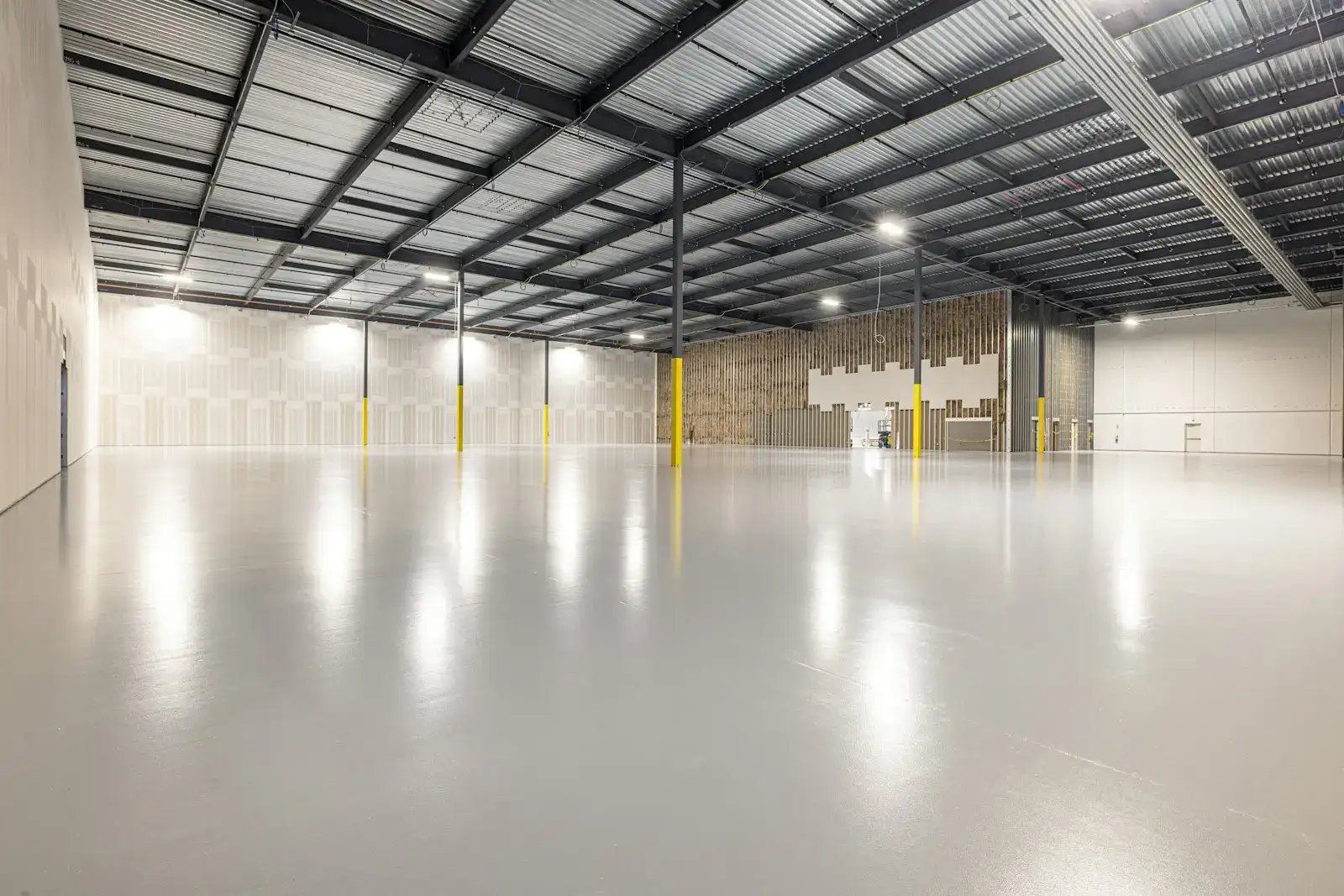
First steps when a cannabis tenant stops paying
The order in which a landlord acts matters, because some BC remedies cancel out others and a formal insolvency filing freezes most of them. Before sending a notice or calling a bailiff:
- Check for an insolvency filing. The federal Office of the Superintendent of Bankruptcy runs a records search covering bankruptcies and proposals, plus CCAA filings since 2009; CCAA records can be viewed free (OSB – Bankruptcy and Insolvency Records Search). If the tenant has filed, a stay of proceedings probably already applies.
- Read the lease. Default definitions, notice and cure periods, re-entry rights, accelerated rent, guarantees, and the deposit or letter of credit terms decide much of what follows.
- Secure the building without taking the cannabis. Protect access, heat and fire systems, but do not move, sell or remove cannabis. Only licence holders can lawfully deal with it (more below).
- Document everything. Dated photos, rent ledgers, correspondence, and any Health Canada or CRA notices the tenant has shared.
- Call a lawyer early. The choice between affirming the lease and ending it is hard to undo. (For drafting that helps at this stage, see leasing to a cannabis tenant.)
BC landlord remedies outside insolvency
In BC, commercial tenancies are governed by the lease, the common law and the Commercial Tenancy Act. The residential tenancy system does not apply. BC commercial landlords commonly weigh three routes (Lesperance Mendes Lawyers):
- Keep the lease alive and sue for arrears. The tenancy continues and the landlord pursues what is owed.
- Terminate and claim damages. The landlord ends the lease under its default terms, re-takes possession and claims arrears and losses, subject to a duty to make reasonable efforts to re-let and mitigate.
- Distress (distraint). Seizing the tenant's goods through a bailiff. Distress affirms the lease, so a landlord who distrains generally gives up the right to terminate for that default.
Court routes under the Commercial Tenancy Act
If a tenant fails to pay rent within seven days of the due date, or breaches a covenant that allows re-entry, and then ignores a written demand, the landlord may apply to the registrar of the BC Supreme Court for an order for possession (Commercial Tenancy Act, ss. 25-26). For non-payment, the tenant can stop the process by paying the arrears and costs before enforcement (s. 26(3)). A tenant who refuses to leave after the lease has ended can be the subject of an application for a writ of possession (s. 18), and a tenant who holds over after the lease expires can be liable for double the yearly value of the premises for that period (s. 15).
BC courts also have a general power to relieve against forfeitures (Law and Equity Act, s. 24), which a tenant may use to ask the court to restore a terminated lease. Careful, well-documented steps reduce that risk.
Is distress for rent still available in BC?
Yes. The Rent Distress Act remains in force (current to September 22, 2026 on BC Laws). Key features:
- A landlord can distrain only goods of the tenant or the person liable for the rent, even if other people's property is on the premises (s. 3(2)).
- Distress ranks ahead of security interests in the tenant's goods, except a purchase-money security interest perfected at the date of distress (s. 3(4)). Lighting, HVAC and extraction equipment is often financed on exactly those terms.
- If the tenant does not sue to recover the goods within five days of the distress and notice, the goods must be appraised by two sworn appraisers before they can be sold (s. 7).
- Wrongful or excessive distress exposes the landlord to damages (ss. 10, 18).
With a cannabis tenant there is an extra problem: the most valuable goods on site are often cannabis and cannabis products, which a landlord or bailiff is not authorized to possess or sell. In practice distress tends to reach equipment and furniture, not inventory.
What changes if the tenant files under the BIA or CCAA
A filing under the federal Bankruptcy and Insolvency Act (BIA) or Companies' Creditors Arrangement Act (CCAA) stops most creditor action, including landlord enforcement.
- BIA proposal. Filing a notice of intention to make a proposal stays creditor remedies against the debtor and its property (BIA s. 69). An insolvent commercial tenant may disclaim a lease on 30 days' notice. The landlord has 15 days to apply to court, but the court will not stop the disclaimer if the tenant could not make a viable proposal without it. After a disclaimer, the landlord has no claim for accelerated rent, and the proposal sets whether the landlord claims actual losses or a formula amount: the lesser of (i) the next year's rent plus 15% of the rent for the rest of the term, and (ii) three years' rent (BIA s. 65.2).
- Bankruptcy. Bankruptcy stays unsecured creditors' remedies (BIA s. 69.3). The landlord's priority claim is for three months' arrears before the bankruptcy and up to three months' accelerated rent if the lease provides for it, capped at what is realized from the property on the leased premises (BIA s. 136(1)(f)). Other landlord rights are governed by provincial law (BIA s. 146). In BC, the trustee may stay in the premises for up to three months, may disclaim the lease, and may assign it with court approval despite a consent clause, with the assignee depositing three months' rent; the trustee pays occupation rent for the time it actually occupies (Commercial Tenancy Act, s. 29).
- CCAA. The court can stay proceedings, for up to 10 days on the initial order and then for extended periods (CCAA s. 11.02). A stay cannot stop the landlord from requiring immediate payment for use of leased property after the order (CCAA s. 11.01). With the monitor's approval, the company can disclaim a lease; the landlord has 15 days to object, and the court weighs viability and hardship to the landlord. Absent a successful challenge, the disclaimer takes effect 30 days after notice (CCAA s. 32).
| Proceeding | Stay on landlord action | Lease disclaimer | Landlord claim |
|---|---|---|---|
| BIA proposal (NOI) | Yes, from filing of the notice of intention | 30 days' notice; 15 days to challenge | Actual loss or formula, capped at 3 years' rent; no accelerated rent |
| Bankruptcy | Yes, for unsecured claims | Trustee may disclaim or assign | Priority for 3 months' arrears plus up to 3 months' accelerated rent, limited to realization from property on the premises |
| CCAA | Yes, by court order | Monitor approval; 15 days to challenge; effective after 30 days | Post-filing rent payable; pre-filing claims dealt with in the plan |
| Court-appointed receivership | Usually, under the receivership order | Depends on the order and lease | Depends on the order and priorities |
Recent cannabis insolvencies with facilities
These public cases show how insolvency tends to play out for facility-based cannabis businesses:
- Tantalus Labs (Maple Ridge, BC), 2023. After the CRA declined to renew the company's cannabis excise licence and threatened to destroy inventory at its facility, the BC Supreme Court approved a quick bulk sale of more than 1,200 kg of cannabis flower. Trustee Ernst & Young estimated an orderly sale might bring about $2 million versus about $300,000 in a fire sale; court documents showed more than $14 million in debt (CBC News / Canadian Press, July 2023). The brands and remaining inventory were later acquired by Atlantic Cultivation (Canadian Press, Aug 2023).
- The Flowr Corporation (Kelowna campus), CCAA. The Flowr Group (Okanagan) Inc. was sold to Avant Brands in February 2023 for $5,115,000 plus assumed liabilities (Flowr news release).
- BZAM, CCAA, February 2024. Ontario Superior Court of Justice, FTI Consulting as monitor; operations included a facility in Pitt Meadows, BC (StratCann).
- Trees Corporation, CCAA, December 2023. Ernst & Young as monitor; four BC retail stores among 13 (Trees Corporation news release).
- CanadaBis group (Red Deer, AB), CCAA, April 2026. Filed citing about $7.6 million in excise tax arrears owed to the CRA (StratCann).
StratCann's year-end roundup lists more than a dozen cannabis companies in CCAA or BIA proceedings during 2024 alone (StratCann, Dec 2024). Two patterns stand out for landlords: excise tax debt to the CRA is a frequent trigger, and value often depends on moving inventory while licences are still valid.
Cannabis inventory: only licence holders can handle it
A landlord's usual instinct, to lock the doors and sell what is inside, does not work with cannabis. Cannabis licences cannot be transferred, and receivers and lenders have run into this directly: in the Pure Global Cannabis case in Ontario, the order required the lawful disposal or destruction of cannabis in consultation with the CRA and/or Health Canada (Torys LLP). A licence holder that intends to stop all licensed activities must notify Health Canada at least 30 days beforehand, describing how remaining cannabis will be sold to another licensed party or destroyed (Cannabis Regulations, s. 36).
If a tenant abandons a site with cannabis still inside, the landlord does not gain any authority to deal with it. Keep the site secure, contact the licence holder's responsible person, and get legal advice on notifying Health Canada and any trustee, monitor or receiver before anyone enters restricted areas. Once the site is clear, tenant exit and decommissioning covers getting the building back to market, and insuring a vacant facility covers the insurance gap that often opens up.
Call before serving a termination notice, before instructing a bailiff, as soon as you learn of a notice of intention, bankruptcy, CCAA filing or receivership, and before signing anything a trustee, monitor or receiver sends you. Deadlines to challenge a lease disclaimer are 15 days, and claim forms have their own deadlines.
How Sean can help
After a default, landlords often face a decision about whether to re-let to another licensed operator, repurpose, or sell. Sean Phillips sells cannabis and commercial buildings across BC and, since 2014, has worked on 276+ Health Canada licence applications as a licensing-readiness consultant. He can assess what the building offers a new licensed tenant or buyer; that consulting is paid and quoted per site (consulting). If selling is the right path, see selling a cannabis grow facility or contact Sean.